




Why Handheld Terminals Are Vital for Government Programs
Billions of dollars move through government programs each year through subsidies, pensions, healthcare benefits, and food security schemes. Yet, according to the World Bank Social Protection Report, 20 to 40% of social protection spending in developing countries fails to reach its intended beneficiaries due to inefficiencies, fraud, and administrative hurdles. At the same time, nearly 45% of the global population lives in rural areas, where access to government offices and services is limited.
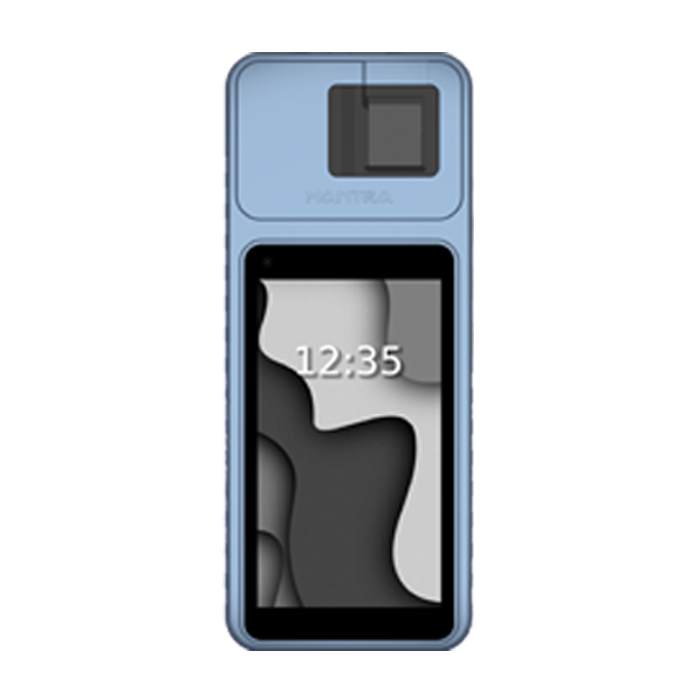
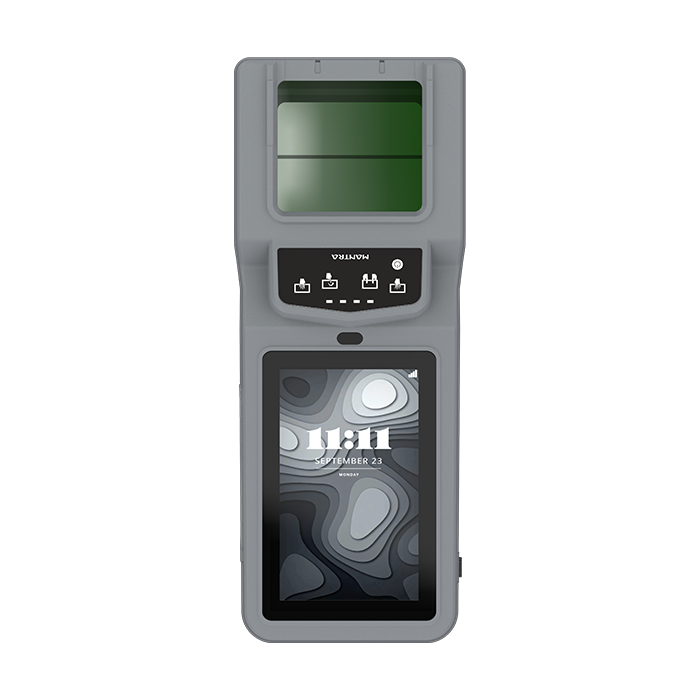
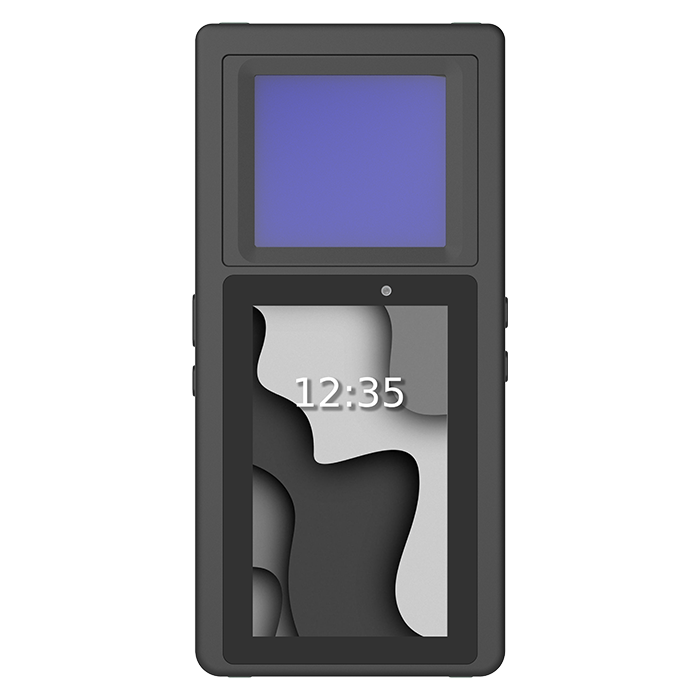
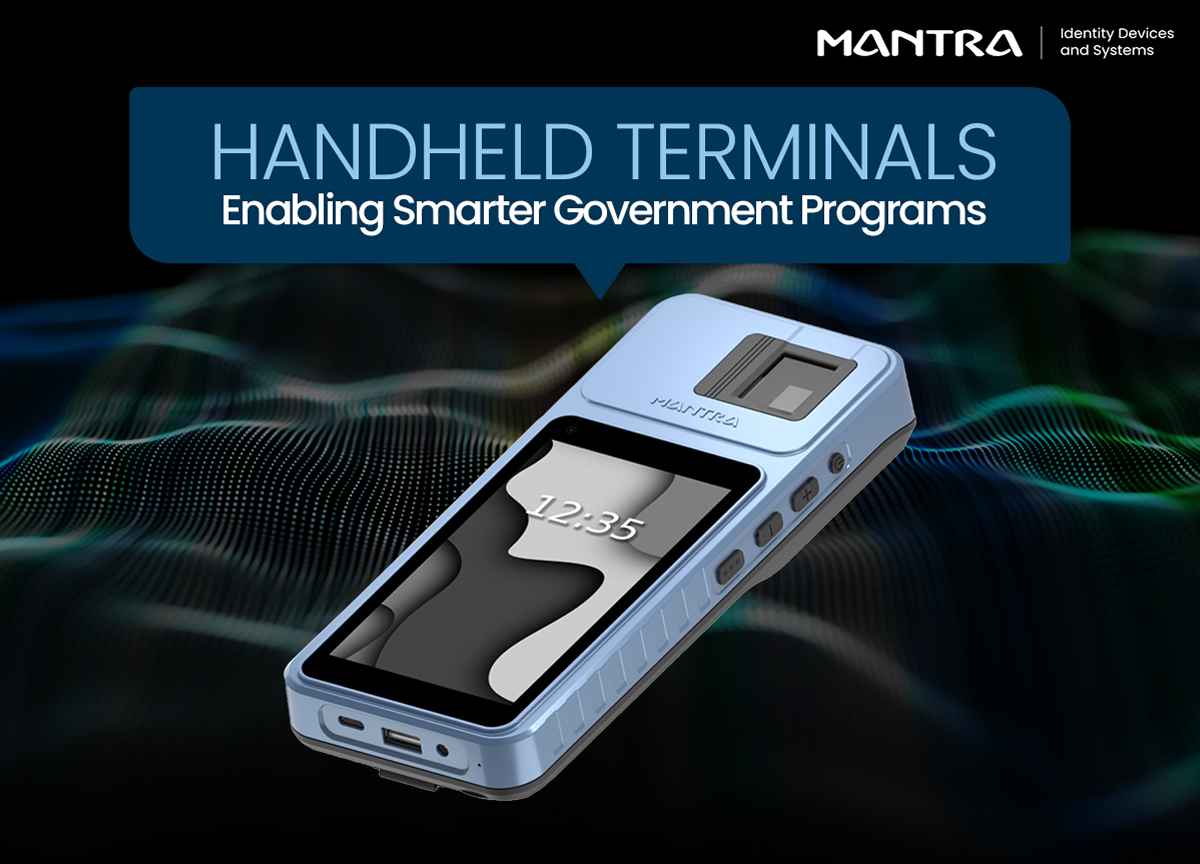
Because of this gap between program design and actual impact, handheld biometric devices have become essential. In order to ensure inclusion and transparency, they enable field officers to provide identification verification, enrollment, and service access at the last mile.
“By introducing biometric handheld terminals, governments can reverse this model and take governance directly to the citizens’ doorstep.”
These technologies are not only persuasive for governments, but they also serve as strategic facilitators of digital governance.
The Challenges of Last Mile Governance
Before the arrival of mobile biometric tablets, governments relied heavily on fixed offices and registration centers, bank branches, and offices. This excluded remote populations, often very people most dependent on welfare.
According to the FAO Rural poverty report, 70% of the world’s poor live in rural regions. For them, traveling to distant centers can be impractical and costly. By introducing biometric handheld terminals, governments can reverse this model and take governance directly to the citizens’ doorstep. This reduces both the travel burden for citizens and administrative delays for governments.
How Handheld Terminals Are Tackling Governance Challenges?
Government programs frequently function in difficult situations with dispersed people, inadequate infrastructure, and high fraud risks. When officials are required to service citizens in remote places, manage huge enrollments, or guarantee real-time authentication, traditional identification verification procedures are insufficient.
Biometric handheld terminals fill these gaps by providing field efficiency, mobility, and security. Some of the most frequent problems are listed below.
-
Challenge: Limited Access in Remote or Crisis Areas
Many residents of rural villages, border areas, or areas devastated by disasters find it difficult to get to fixed government offices, which keeps them out of government benefit programs and crucial identification verification services.
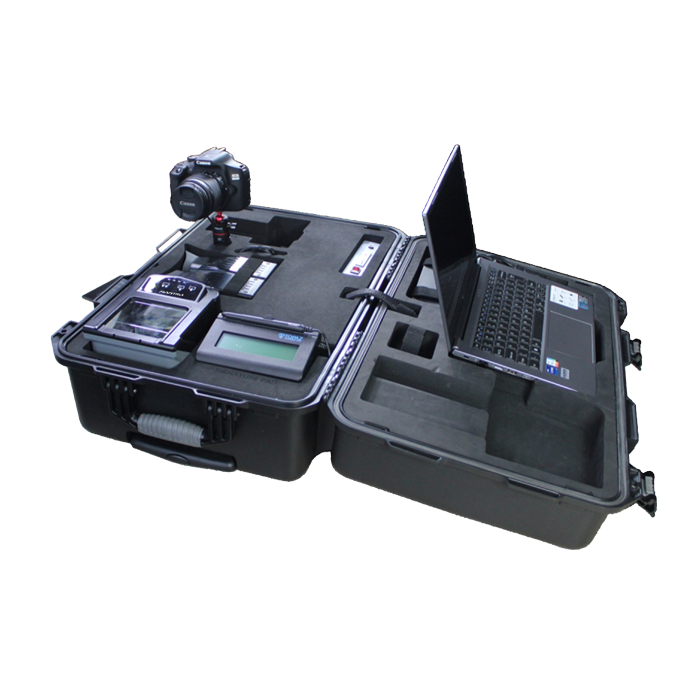
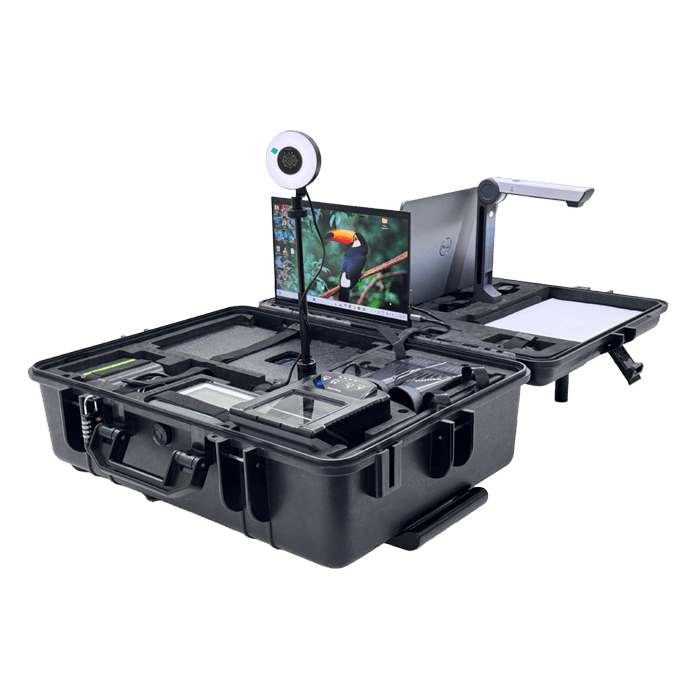
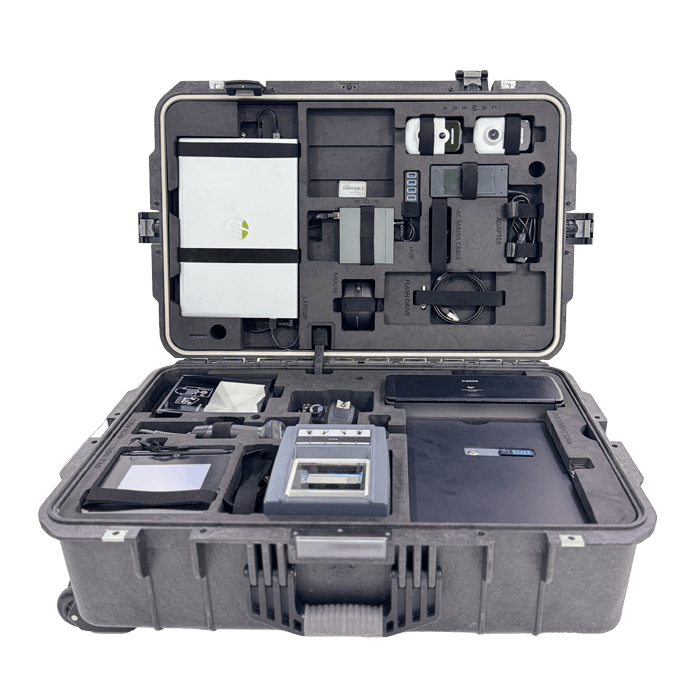
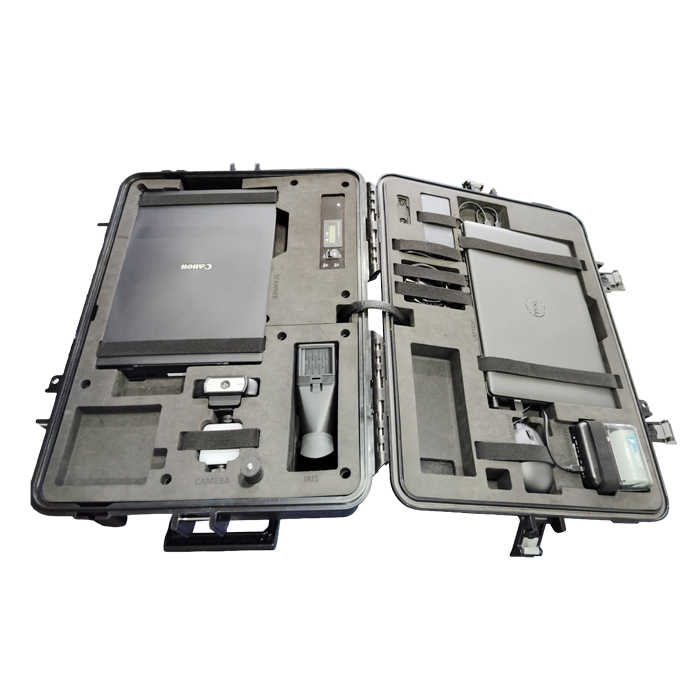
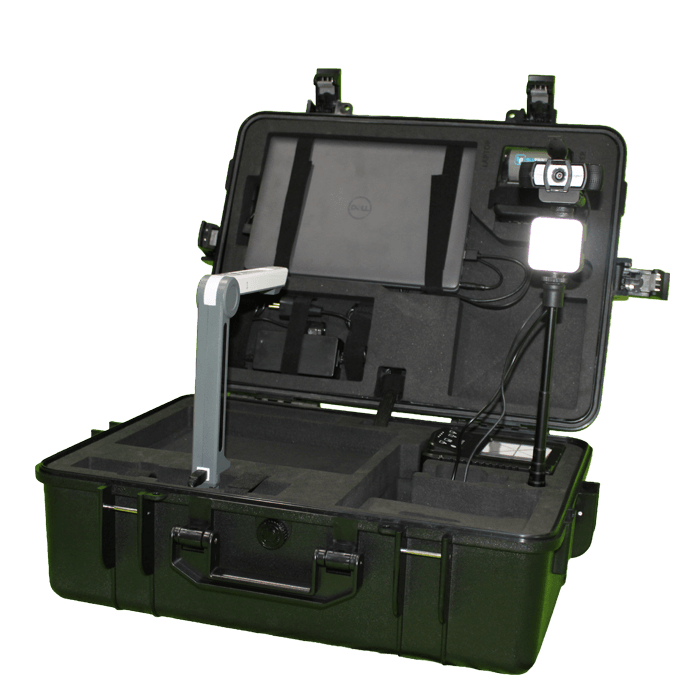
Solution: Officials can assist citizens in remote locations, border regions, and disaster zones without the need for permanent offices thanks to mobile handheld biometric equipment. For instance, handheld enrollment kits were used in India’s Aadhaar initiative to register approximately 1.3 billion people, many of whom lived in rural and tribal areas.
-
Challenge: Preventing Fraud in Welfare Programs
Benefits and subsidies from the government are frequently abused to create false identities, which leads to large financial leaks and an unequal allocation of vital public services.
Solution: By using a biometric authentication terminal with fingerprint or iris scanners, governments ensure that only eligible beneficiaries receive pensions, food subsides, or health benefits.
-
Challenge: Slow & Error-Prone Enrollment
Large scale programs like national IDs or voter registration often face delays, errors and manual paperwork, leading to inefficiencies and dissatisfaction among beneficiaries.
Solution: Biometric handheld terminals enable rapid data capture in the field, allowing officials to collect demographic data, biometrics, and documents instantly, cutting delays and reducing errors.
-
Challenge: Data Duplication & Poor Record Management
Inaccurate synchronization results in records being out-of-date or redundant, which leads to benefit mismanagement and complicates planning and accountability in governance.
Solution: With built-in Wi-Fi, SIM verification, or satellite connectivity, handheld terminals synchronize data directly with a national database. This prevents duplication, ensures live records, and supports accurate policy planning.
-
Challenge: High-Cost Fixed Infrastructure
Building and maintaining permanent government officers or enrollment centers is resource heavy, making large-scale citizen outreach expensive and slow.
Solution: Setting up permanent service centers is expensive. Mobile biometric handheld devices offer cost-effective and flexible deployment for seasonal campaigns, elections, or disaster relief.
The Rise of Biometric Tablets in Governance
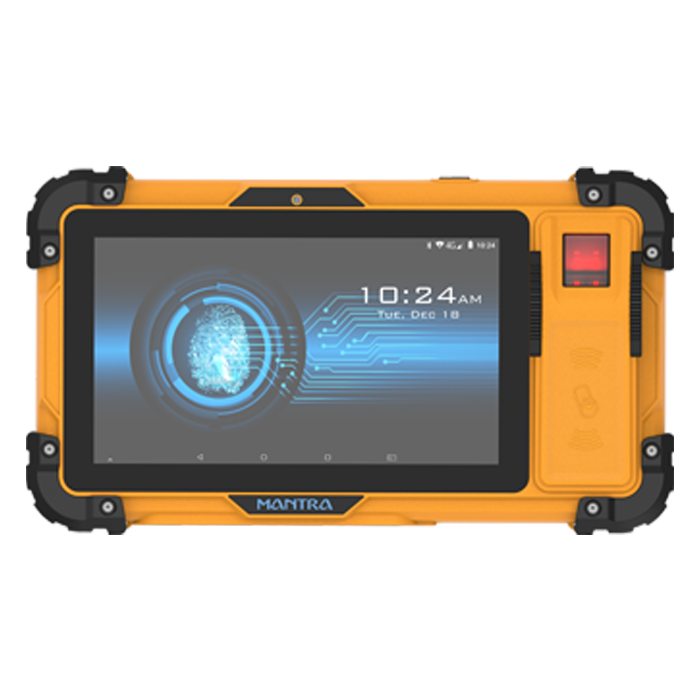
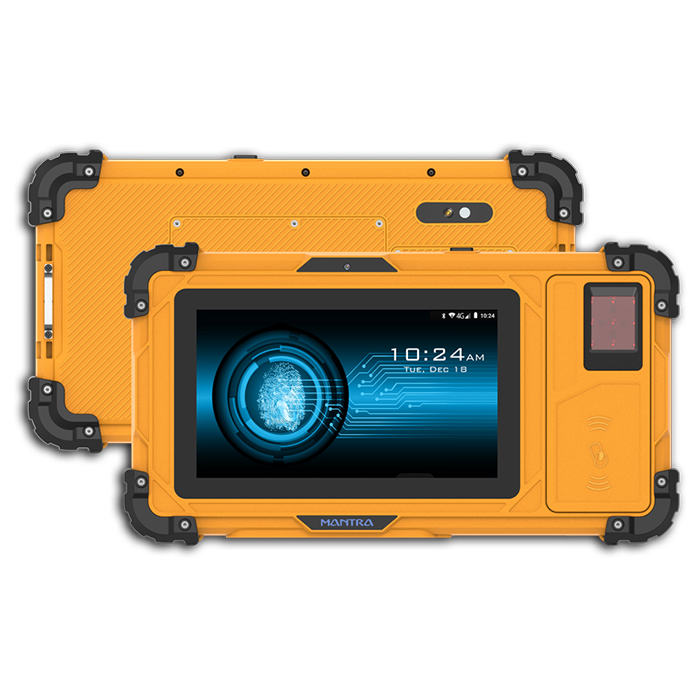
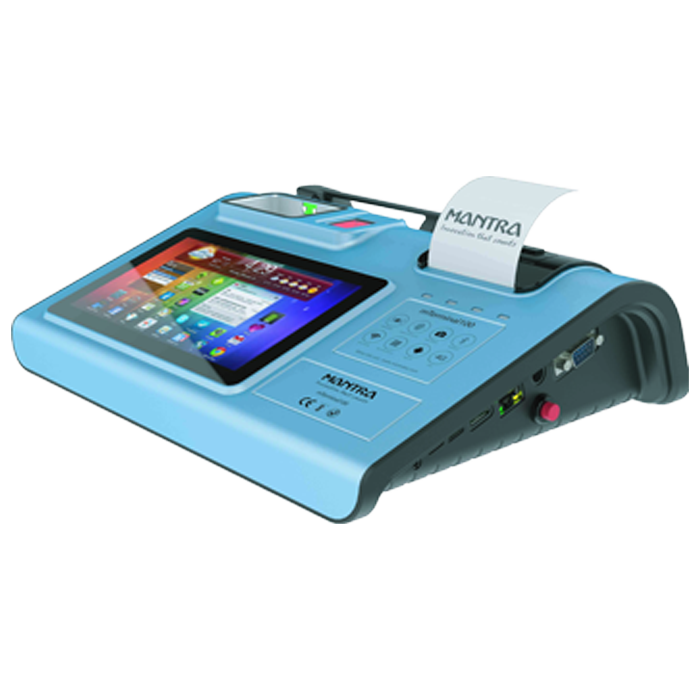
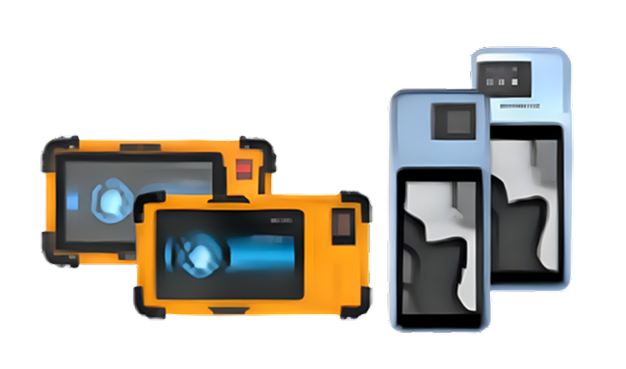
Beyond handheld solutions, a Mobile Biometric tablet emerges as a versatile tool for large scale identity management and service delivery in government projects.
Tablet-Based Biometric Attendance System
Systems like the Mantra Biometric Tablet are being used by agencies more frequently to monitor the attendance of field workers, medical personnel, and welfare recipients. This increases accountability and decreases “ghost workers.”
Biometrics Tablets for Education
Schools and training centers are deploying a Biometric Tablet for attendance to monitor students accurately, helping reduce dropouts and improve long-term outcomes.
Workforce Management
In municipal and public sector projects, tablets with fingerprint sensors are widely used for managing staff attendance and ensuring the timely wages disbursement.
Citizen Enrollment
A tablet-based biometric attendance system enables digital ID registration, border control checks, and refugees program management with mobility and precision. Example for Nigeria’s voter registration initiative, a tablet with biometric scanner was deployed to verify polling station staff and prevent impersonation, improving electoral integrity.
Preparing for the Future: Mobility as a Core of Digital Governance
Evidence increasingly shows that mobile biometric identity systems are central to government digital services. In India, for example, Aadhaar—India’s biometric identity program recorded 1.96 billion authentication transactions in April 2023, a rise of over 19 percent compared to the same month the previous year. That same month saw more than 250 million e-KYC transactions.
By April 2025, the cumulative number of e-KYC transactions had surpassed 2,393 crore (~23.93 billion). Globally, the World Bank’s ID4D program reports that roughly 850 million people lack any form of legal identity. At least 1.1 billion do not have a digital record of their identity. And about 3.3 billion people still cannot use a government-recognized digital identity to transact securely online.
These figures imply that governments have to build resilient, mobile-ready systems including biometric scanners embedded in mobile or tablet devices in order to support eKYC, digital payments, and seamless service delivery. Otherwise, large portions of the world’s population risk being excluded from digital governance and services.
Wrapping Up!
Tablet-based solutions are no longer optional; they are essential for inclusive and transparent governance. A handheld biometric device extends services to the last mile, and with fingerprint scanning capability, it supports scalable programs in education, workforce management, and welfare delivery.
Investing in mobile biometric tablets guarantees that citizens receive services in a fair and safe manner. Mantra Identity Devices and Systems proficiency in cutting-edge biometric hardware enables authorities to construct dependable, citizen-focused solutions. Within the growing digital identity ecosystem, there is a significant opportunity due to the increasing demand for biometric handheld terminals and attendance-focused tablets.