


The Complete Guide to Contactless Biometric Terminals: Identity Verification, Fraud Prevention, and Authentication at Scale
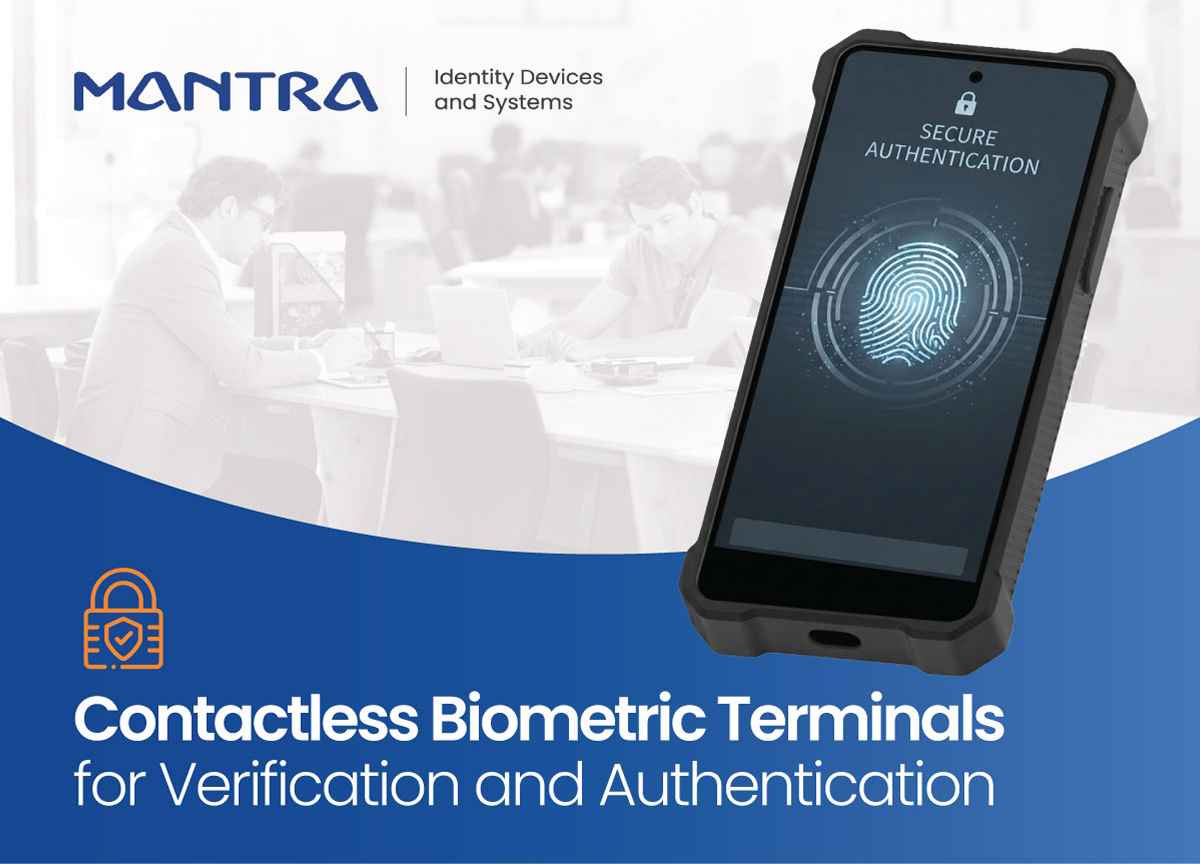
Identity Verification is undergoing its biggest transformation since the introduction of passwords. As fraud becomes more sophisticated, compliance requirements become stricter, and customer expectations continue to rise, organizations are replacing traditional authentication methods with biometric terminals.
This shift is not happening in one sector alone. It is happening simultaneously across banking, government, healthcare, telecom, and enterprise security, industries that, on the surface, have very little in common, but they share the same underlying problem: the way they have historically confirmed
“you are who you say you are”no longer holds up against modern fraud, and compliance demands, or modern customer expectations.
From banking and government services to healthcare, telecom, and enterprise security, contactless biometric technology is helping organizations verify identities faster, reduce fraud, improve user experiences and streamline operations. What started as a niche upgrade to physical access control has become a board level discussion about risk, cost and customer trust.
This guide explores why organizations are adopting contactless biometric terminals, the business challenges they solve, implementation considerations, and what to look for when selecting a solution, written for the procurement teams, security leaders, IT managers, and operations decision-makers who are evaluating this technology for the first time or replacing an aging deployment.
The Breaking Point: Why Legacy Authentication Can No Longer Keep Up
Most organizations still rely on a combination of:
Passwords
PINs
Smart Cards
Physical IDs
Manual Verification Process
Each of these methods was designed for a different threat environment, one where forging a physical document required real skill, where stolen credentials could only be used by human typing them in manually, and where verification happened face-to-face by default. That environment no longer exists.
The core problem is structural: these methods verify the credentials, not people.
A password proves that someone typed the correct string of characters, not that the right person typed it. A smart card proves that someone is holding the card, not that they are the person it was issued to. A physical ID proves that a document exists with a name and photo on it, not that the document is genuine, or that the person presenting it is the one pictured.
The gap between “verifying a credential” and “verifying a person” is exactly where fraud lives:
Passwords can be stolen through phishing, credential stuffing, or data breaches that expose millions of reused logins at once.
Cards can be shared intentionally or through theft, with no way for the system to know the difference.
Documents can be forged and increasingly, forged convincingly enough to pass casual human inspection.
PINs can be guessed, observed, or socially engineered particularly in high-volume environments where staff are rushed and verification is treated as a formality rather than a control.
What makes this moment different from previous fraud cycles is the introduction of AI as a tool for attackers, not just defenders. Cybercriminals are increasingly using AI generated deepfakes to impersonate real people in video calls and onboarding flows, building synthetic identities that blend real and fabricated data to pass traditional checks, and automating credential theft at a scale no manual review process can keep pace with. Traditional verification methods, built for an era of individual, manual fraud attempts, are simply outmatched by automated AI assisted attacks at scale.
Contactless biometric verification addresses this challenge at its root by authenticating unique human characteristics: a face, an iris, a fingerprint, a vein pattern rather than relying solely on something a person knows (a password), has (a card), or can produce on demand (a document). It shifts the question from “did you provide the right credential?” to “are you physically the person this identity belongs to?” a much harder question for a fraudster to answer convincingly.
Defining the Technology: How Contactless Biometric Terminals Work?
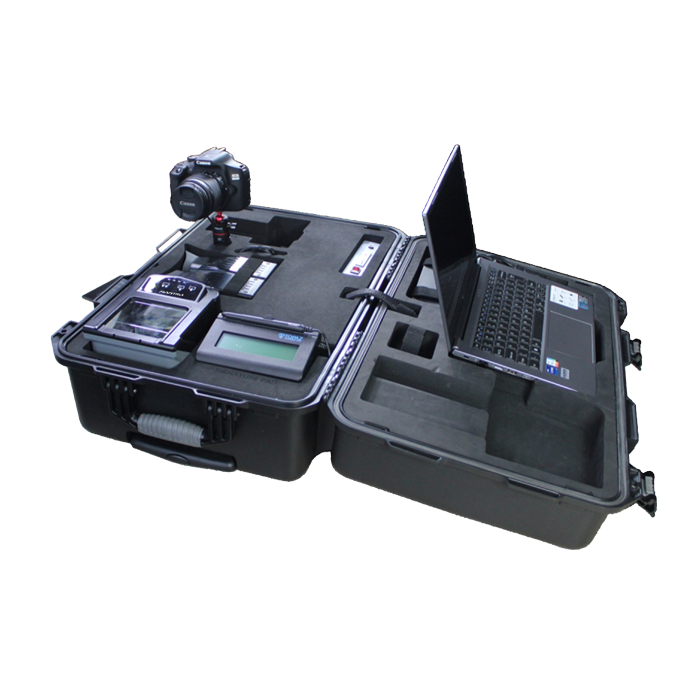
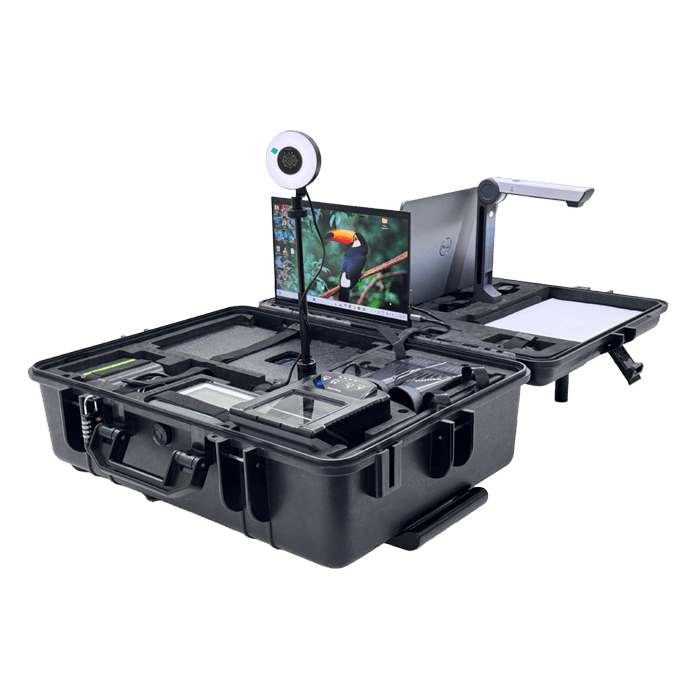
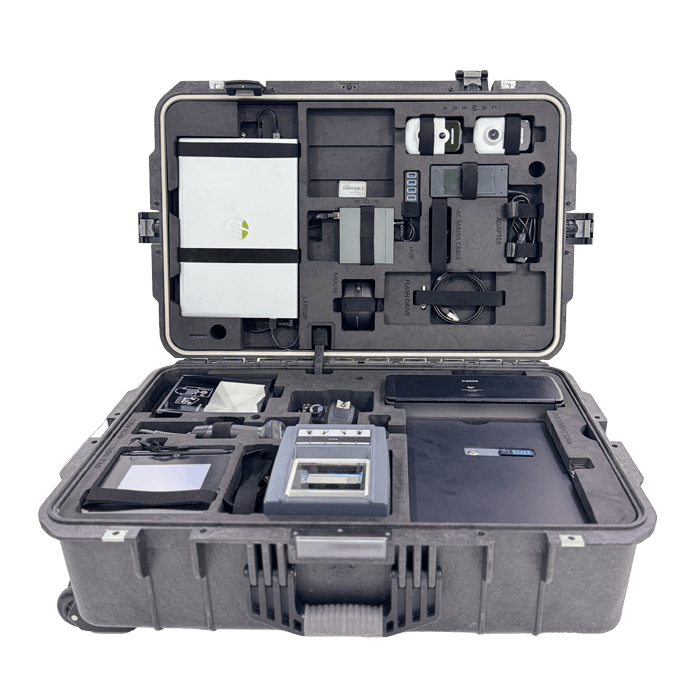
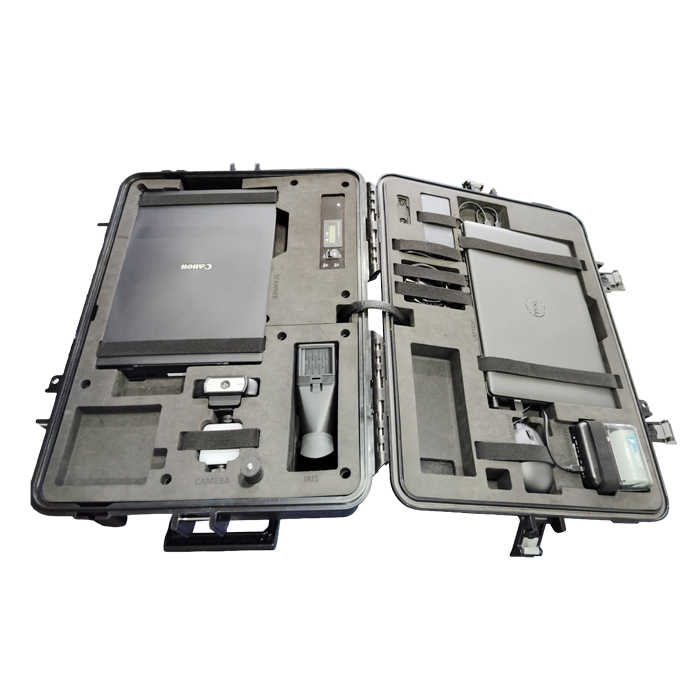
A device that records and validates biometric characteristics without requiring physical contact is known as a contactless biometric terminal. Contactless terminals use cameras and sensors instead of physical touch to collect biometric data from a short distance, in contrast to legacy fingerprint scanners that required pressing a finger onto a sensor plate—a procedure that raised hygienic concerns, deteriorated with wear, and struggled with dirt, moisture, or worn ridges.
Depending on the application and the level of assurance required, these terminals may capture one or more of the following biometric modalities:
Facial Biometrics
Captures and matches the facial geometry, often the fastest and most user-friendly modality for high volume, walk-up scenarios.
Iris Biometrics
Used where extremely high accuracy is required, such as large scale national identity or border control programs.
Contactless Fingerprint Biometrics
Capturing fingerprint detail from a short distance via specialized cameras, preserving the legal and forensic familiarity of fingerprints without the hygiene drawbacks of touch sensors.
Palm Vein Patterns
An internal biometric trait that is difficult to replicate or spoof, often used in environments demanding very high security with minimal user friction.
Multi-modal Biometric Combinations
Combining two or more of the above to increase accuracy and provide a fallback option when one modality is degraded (for example, by lighting conditions or an injury).
Capturing the biometric is only the first step. To function as a real identity verification system rather than a simple camera, these devices typically integrate several layers of technology working together:
High-resolution cameras capable of capturing usable biometric detail under real world, not laboratory conditions.
Dedicated biometric sensors tuned to the specific modality being captured.
Liveness detection technology that distinguishes a live, physically present person from a photo, video replay, mask, or digital injection attack.
AI-powered matching algorithms that compare the captured biometric against a stored template or database record in real time.
Connectivity modules that allow the terminal to communicate securely with backend systems, whether on-premises servers or cloud platforms.
Enterprise software integrations that connect the terminal’s verification result to the systems that actually need it access control, core banking, eKYC platforms, or national ID databases.
The result, when these layers work together correctly, is fast, secure, and frictionless identity verification: a person stands in front of the device for a moment, and the system confirms or denies that they are who their claimed identity says they are, without a card to swipe, a password to recall, or a document to physically hand over.
5 Forces Driving Enterprise Adoption Of Contactless Biometric
Identity Fraud Has Outgrown Yesterday’s Defences
Fraudsters no longer rely solely on stolen passwords. The fraud landscape organizations face today is layered and increasingly automated:
Synthetic Identities fabricated identities built by combining real and fake personal data, designed specifically to pass automated checks that rely on data matching alone.
Deepfake attacks AI generated video or images used to impersonate a real person during remote verification or onboarding
Credential stuffing automated attempts to reuse leaked username-password combinations across multiple platforms.
Account takeovers gaining unauthorized control of an existing, legitimate account rather than creating a new fraudulent one.
Document fraud forged or altered physical and digital identity documents.
Modern contactless biometric terminals are built specifically to counter this category of threat. Advanced liveness detection and anti-spoofing mechanisms are designed to ensure the person being verified is physically present in front of the device in that exact moment, not a photo held up to the camera, not a pre-recorded video, and not a digitally injected feed. This is precisely the layer of defense that static, document-based, or credential-based systems cannot provide on their own. But it is important to understand that security alone is not enough anymore. The way people expect to verify their identity has changed fundamentally.
Customer Expectations Have Permanently Shifted
Customers expect the same seamless authentication experience they receive from their smartphones and digital banking applications, unlock with a glance, confirm a payment with a fingerprint, log in without typing a single character. That expectation does not stay confined to mobile apps; it follows the customer into every physical interaction with an organization.
Organizations that still rely on manual, document-based verification often experience the gap between expectation and reality directly:
Long wait times, as staff manually inspect documents and cross-check details.
Higher abandonment rates, particularly in onboarding flows where friction at the start of a relationship causes prospective customers to simply walk away.
Lower customer satisfaction scores, driven by a process that feels outdated compared to digital-first competitors.
While preserving and frequently enhancing the process’s fundamental security, contactless biometric verification lessens this friction. The company receives a stronger verification result than manual review usually does, and the client has a quicker, easier contact.
Regulatory Compliance Keeps Raising the Bar
Stronger identity assurance systems are becoming more and more necessary for governments and regulators to operate in regulated industries, not as best practices. The following industries have especially stringent compliance requirements:
Banking & Financial Services
Telecommunications
Government services
Healthcare
Critical infrastructure
These regulations are rarely static; rather, they usually become more stringent over time as authorities react to emerging risk categories and fraud typologies. Because biometric verification links a specific, verified physical action (a face capture, a fingerprint match) to a specific identity at a specific moment instead of depending on a credential that could theoretically have been used by anyone holding it, it offers a stronger audit trail than traditional authentication methods. That audit trail might mean the difference between compliance teams being able to prove due diligence and not being able to piece together what truly transpired during a transaction or enrollment.
Service Delivery Speed Has Become a Competitive Variable
Even minor transaction delays can add up to major operational inefficiencies over the course of a day, a branch, or a network of sites in high-volume environments. Here are some instances of settings where this is clearly evident:
Bank branches, where the length of the line directly influences how well customers perceive the service.
Airports, where an entire terminal’s throughput is impacted by verification speed.
Hospitals, where patient identification delays ripple into clinical workflows.
Government service centers, yet, at scale, enrollment backlogs might extend into days or weeks.
Telecom registration centers, where high subscriber volumes make manual verification a persistent bottleneck.
Contactless biometric terminals can verify users within seconds, reducing queue times and improving throughput turning identity verification from a bottleneck into a step that barely registers in the customer’s overall experience.
The Cost of Manual Processes Keeps Climbing
Manual verification processes are not just slower — they are structurally more expensive to run and to scale. They require:
Paper documentation that must be stored, managed, and eventually disposed of securely.
Repeated identity checks across multiple touchpoints, often because there is no shared, trusted verification record.
Administrative overhead tied to error correction, re-verification, and exception handling.
Additional trained staff to perform and oversee verification.
Identity verification is no longer a barrier in the customer’s overall experience thanks to contactless biometric terminals, which can authenticate customers in a matter of seconds, cutting down on wait times and increasing throughput.
Where Contactless Biometric Terminals Deliver Value across Industries
Banking and Financial Services
In banking, identity verification touches almost every stage of the customer relationship. Common applications include:
eKYC (electronic Know Your Customer), enabling regulatory-compliant identity verification without an in-person branch visit.
Customer onboarding, where biometric verification replaces slower manual document review.
High-value transaction authentication, adding a biometric checkpoint for transactions that warrant extra assurance.
Branch access management, controlling who can physically enter restricted areas of a branch or back office.
Government and National ID Programs
Government deployments tend to operate at a different scale than private-sector use cases, often spanning entire populations. Applications include:
Welfare distribution, ensuring benefits reach the verified, intended recipient rather than a duplicate or fraudulent claimant.
Citizen enrollment into national identity databases.
Beneficiary verification at the point of service delivery.
Border management, verifying travelers’ identities against issued travel and identity documents.
Healthcare
In healthcare, identity errors carry consequences that go beyond financial loss. Applications include:
Patient identification at registration and during care, reducing the risk of mismatched records.
Medical record matching, ensuring a patient’s history is linked correctly across visits and providers.
Insurance verification, confirming that the person receiving care is the policyholder or an authorized dependent.
Telecommunications
Telecom operators face high enrollment volumes combined with strict regulatory requirements around subscriber identity. Applications include:
SIM registration, verifying a subscriber’s identity at the point of activation.
Subscriber verification for ongoing account management and fraud prevention.
Customer onboarding for new connections and service upgrades.
Enterprise Security
Beyond customer-facing use cases, organizations increasingly apply the same technology internally. Applications include:
Visitor management, verifying and logging the identity of non-employees on site.
Access control for restricted facilities and sensitive areas.
Workforce authentication, confirming employee identity for time tracking, system access, or secure operations.
Measuring Return on Investment: A Framework for Decision Makers
Decision-makers often focus solely on acquisition costs and the upfront price of hardware and integration. This framing systematically undervalues the technology, because the bulk of its return shows up elsewhere in the organization, not on the purchase invoice.
A complete evaluation should include:
Fraud reduction the value of fraudulent transactions, enrollments, or claims prevented rather than processed.
Lower administrative workload staff hours no longer spent on manual document review and repeated verification.
Faster customer processing throughput gains that translate into either cost savings or revenue capacity at the same staffing level.
Reduced compliance risk avoiding the direct and reputational costs associated with regulatory findings or penalties.
Improved customer retention, fewer abandoned onboarding flows and a smoother overall experience.
Reduced operational overhead, less paper, less manual error correction, and fewer exception-handling escalations.
When these factors are accounted for, the calculation changes substantially. A single prevented fraud incident, or a single avoided compliance violation, can often justify the entire investment on its own before any of the efficiency or experience gains are even factored in. Organizations that evaluate biometric terminals purely on hardware cost are, in effect, measuring only the smallest part of the equation.
Evaluation Criteria: What to Look for Before You Buy
When evaluating contactless biometric terminal solutions, the following criteria separate systems that perform reliably in production from those that only perform well in a demo.
Biometric Accuracy
The terminal needs high matching performance under real-world conditions, not just controlled lab testing. Accuracy that degrades under typical field conditions undermines every other benefit the system is meant to deliver.
Liveness Detection
Protection against photos, videos, masks, and spoofing attacks is non-negotiable. As spoofing techniques become more sophisticated, liveness detection capability is one of the clearest dividing lines between a genuinely secure system and one that merely looks secure.
Multimodal Support
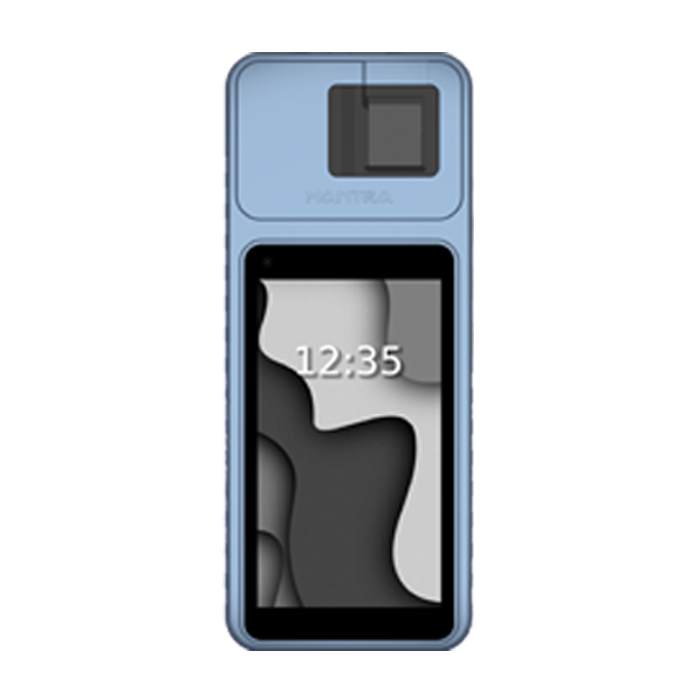
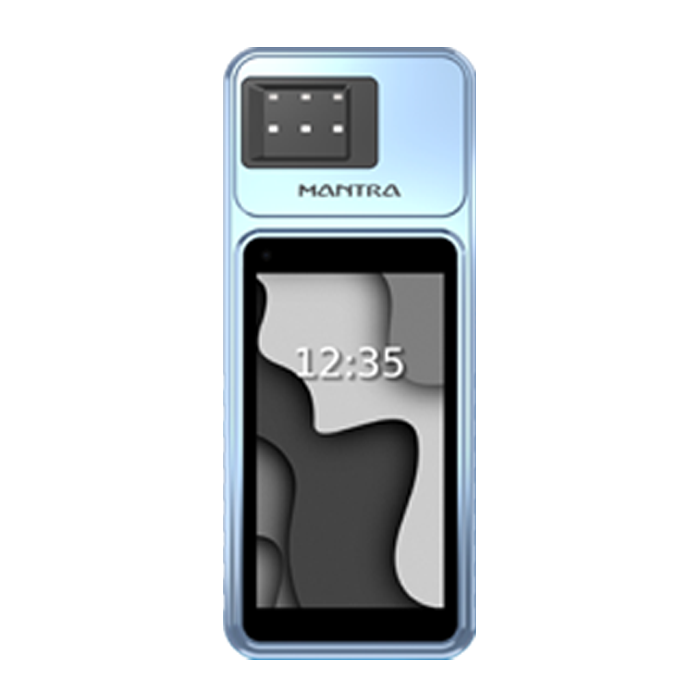
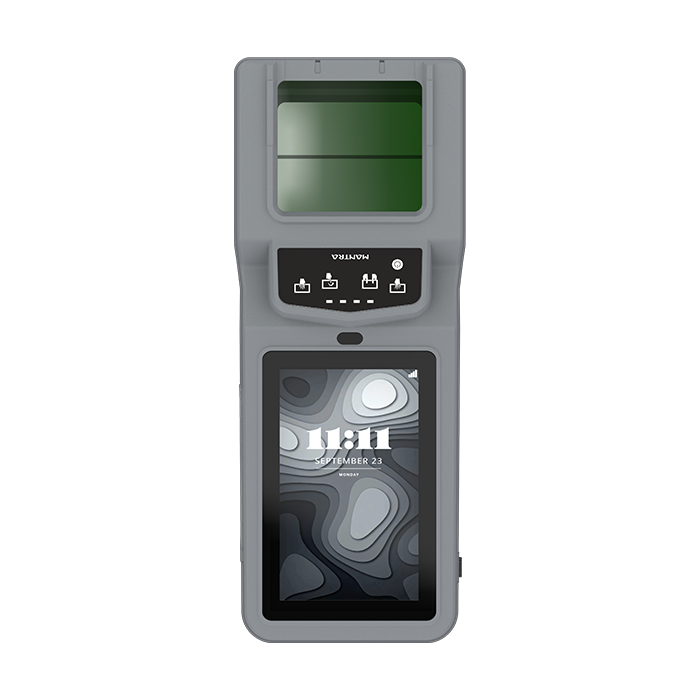
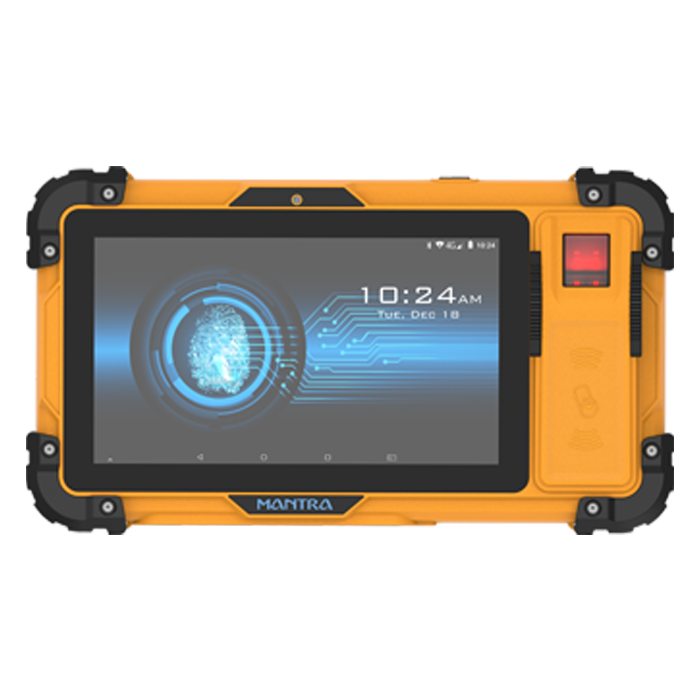
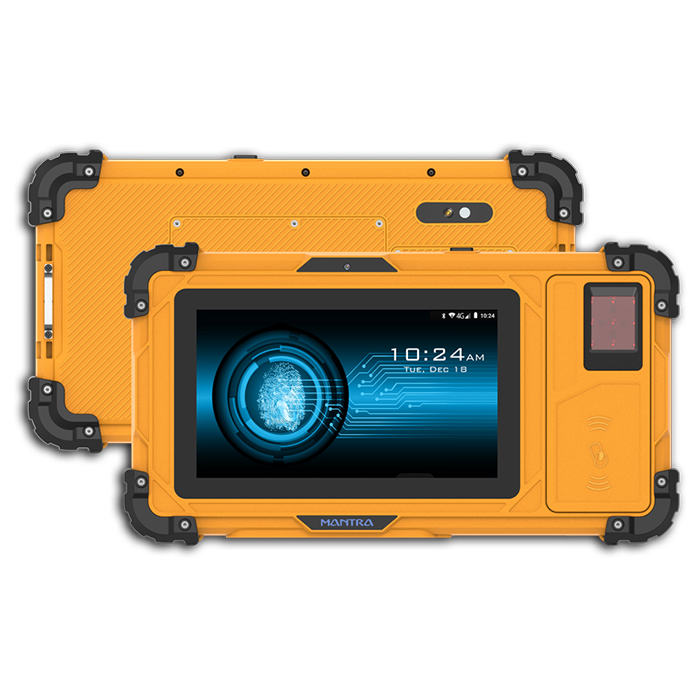
The ability to support face, iris, and fingerprint verification from a single platform provides flexibility across diverse use cases while ensuring reliable fallback options. Devices such as the MOXA60 Android NFC Handset further enhance this capability by combining biometric verification, NFC functionality, and Android mobility in a single platform.
Environmental Performance
Reliable operation in varying lighting, temperature, and field conditions matters enormously once a device leaves a controlled office environment and is deployed at an outdoor border checkpoint, an unconditioned rural enrollment center, or a busy airport terminal with constantly changing light.
Integration Capabilities
A terminal is only as useful as the systems it can connect to. Compatibility with the following is essential for most enterprise deployments:
Access control systems
eKYC platforms
National ID databases
Enterprise applications
Scalability
The ability to support large-scale deployments across multiple locations without a proportional increase in management overhead determines whether a solution that works well in a pilot will still work well at full rollout.
What’s Next: The Future Trajectory of Contactless Authentication
The next generation of biometric terminals will increasingly incorporate:
AI-driven risk assessment scoring the risk level of a given verification attempt in real time rather than treating every check as identical.
Continuous authentication, moving from a single point-in-time check toward ongoing verification throughout a session or interaction.
Mobile biometric integration, connecting terminal-based verification with the biometric capabilities already built into smartphones.
Decentralized digital identity frameworks, where individuals hold more control over their own verified credentials rather than relying solely on centralized databases.
Contactless multimodal verification is becoming the default expectation rather than a premium feature, as hardware costs continue to fall and accuracy continues to improve.
Organizations that invest today will be better positioned to adapt to evolving security and compliance requirements, rather than facing a disruptive replacement cycle when their existing infrastructure can no longer keep pace with new threats or new regulatory expectations.
Whether deployed for banking, healthcare, government services, telecom registration, or enterprise security, the right contactless biometric terminal can help organizations strengthen trust while simplifying the verification process.