


Biometric Liveness Detection: Securing Identity Verification for Senior Citizen Services
For a senior citizen receiving a pension, completing an identity check should be a simple process. Yet the reality can be quite different when verification requires travelling to a bank branch, government office, or designated service center.
Taking biometric authentication closer to the beneficiary can address part of this challenge. However, moving authentication outside a controlled service center raises another important question:
How can an organization establish that the biometric being presented during remote or field verification comes from a live person?
This is where biometric liveness detection becomes important.
Liveness Detection adds an additional layer to biometric authentication by checking whether the biometric sample is being captured from a live person rather than an artificial or reproduced biometric presentation.
For pension authorities, banks, government departments, and organizations serving senior citizens, this capability can strengthen identity assurance when biometric verification moves from a fixed counter to the field.
What is Biometric Liveness Detection?
Biometric Liveness Detection is a security mechanism used to determine whether a biometric characteristic presented to a biometric system originates from a live person at the time of capture.
To understand why this matters, it helps to separate two parts of biometric authentication.
A biometric matching system asks:
Does this biometric correspond to the claimed identity?
Liveness Detection asks:
Is this biometric being presented by a live person during the authentication attempt?
These questions address the different parts of the authentication process. A successful biometric match can establish a relation between the captured biometric and an identity record. Liveness detection can provide an additional check on the biometric presentation itself.
When used together they can contribute to the stronger identity assurance when biometric authentication is used in field-based services.
Why Does This Matter When Authentication Moves Into the Field?
A biometric authentication process performed at a bank branch or government office usually operates within a relatively controlled environment.
The device is in a known location. Power & connectivity are generally available. Staff are present to assist users, and the organization controls the physical environment.
Field authentication is different.
A verification process may take place at a senior citizen’s home, a community center, a temporary service camp, or another assisted service location.
The organization therefore needs to consider not only how to capture the biometric, but also how to maintain confidence in the authentication process when verification happens away from a fixed service counter.
This is where liveness detection becomes part of a larger field authentication architecture.
The workflow can be viewed as:
Biometric Capture -> Liveness Assessment -> Identity Verification -> Service Delivery.
The exact implementation depends on the biometric modality, authentication application, SDK, and identity infrastructure used by the organization.
Why are Senior Citizen Services a Relevant Use Case?
Senior Citizen services provide a particular example of why identity verification may need to move closer to the beneficiary.
Senior citizen services provide a practical example of why identity verification, including:
- Pension & Life-certificate services
- Doorstep banking
- Financial services
- Welfare benefit verification
- Healthcare services
- Government citizen services
- Assisted service delivery
These services have different workflows, but they share a common requirement:
The organization needs to establish the identity of the receiving service. For some beneficiaries, travelling to a fixed service location may be inconvenient or difficult.
This creates an opportunity for authorized personnel to take the verification process to the beneficiary.
What Does Field-Based Identity Verification Look Like?
Consider a field officer providing an identity dependent service to a senior citizen. Instead of asking the beneficiary to travel to a service center, the officer carries a handheld biometric terminal to the point of service.
The process can follow a simple sequence:
Identify -> Capture -> Check -> Verify -> Serve
-
Identify
The field operator retrieves the relevant customer or beneficiary record through the authorized application.
Depending on the workflow, the operator may enter identification details or scan a supported QR Code or barcode.
-
Capture
The beneficiary presents the biometric required by the application. The handheld terminal captures the biometric at the point of service.
-
Check
Where the deployed authentication system supports liveness or presentation attack detection, the biometric presentation can undergo the applicable liveness assessment.
This adds a check focused on whether the biometric presentation comes from a live person.
-
Verify
The captured biometric is processed through the authorized authentication infrastructure to determine whether it corresponds to the claimed identity.
-
Serve
Once the required authentication checks are completed successfully, the application can proceed with the authorized service.
Depending on the deployment, the service could relate to pension, banking, welfare, healthcare or another citizen service workflow.
This is the point where portable biometric rugged terminals become an important part of the field operation.
What Does a Handheld Biometric Terminal Need to Support?
Taking biometric authentication into the field introduces requirements that may be less important in a fixed installation.
The terminal needs to work for both the operator and the person being authenticated.
Organizations may therefore need to consider:
Portability
Can the operator comfortably carry the device between service locations?
Biometric Capability
Does it support the biometric modalities required by the application?
Identification Interfaces
Can it support QR or barcode-based identification where required?
Application Integration
Can it communicate with the organization’s existing authentication application?
Connectivity
Can the complete workflow operate under the connectivity conditions expected in the field?
Security
How are biometric transactions protected throughout the authentication process?
Reliability
Can the device support repeated use across different service locations?
These requirements help explain why a handheld biometric terminal is different from simply attaching a biometric sensor to a conventional workstation.
How Can MOXA 52 Support This Field Authentication Model?
This is where MOXA 52 fits in the workflow.
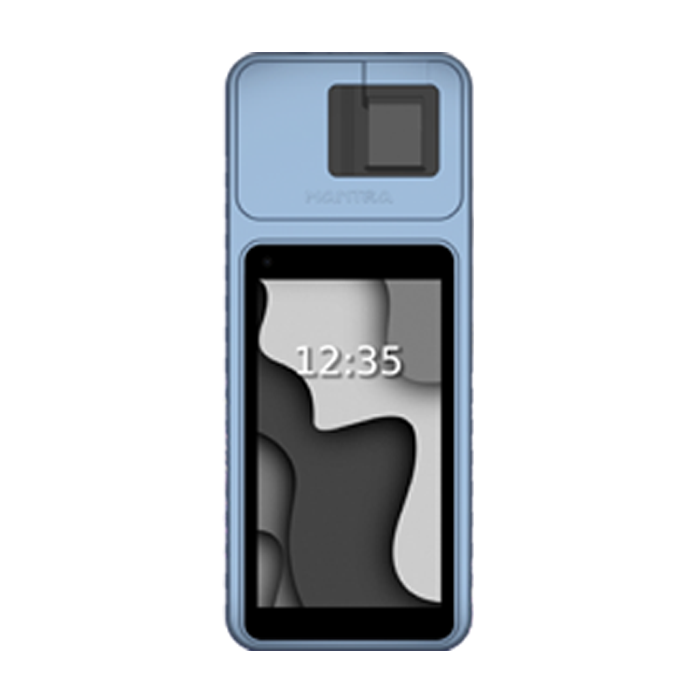
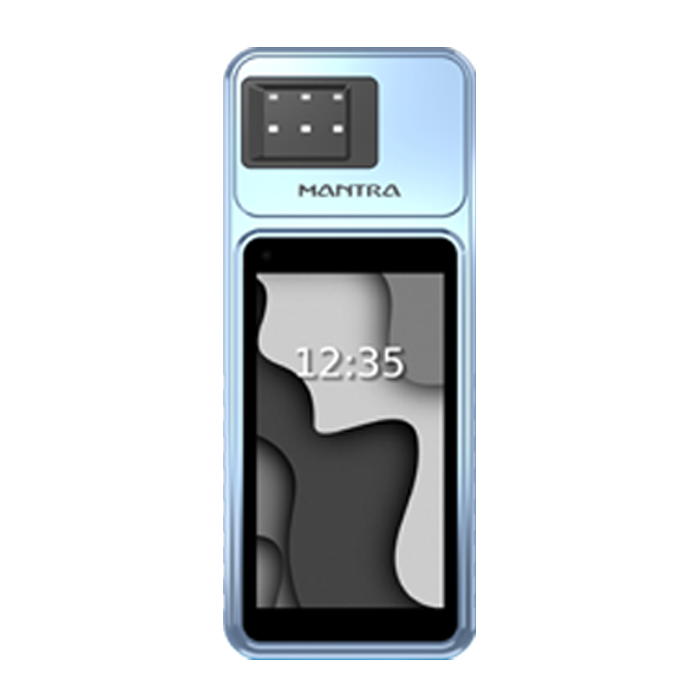
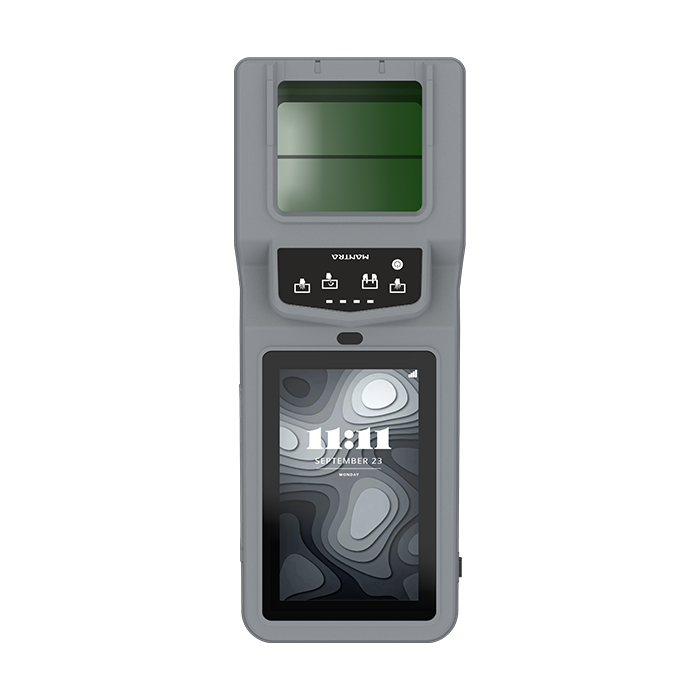
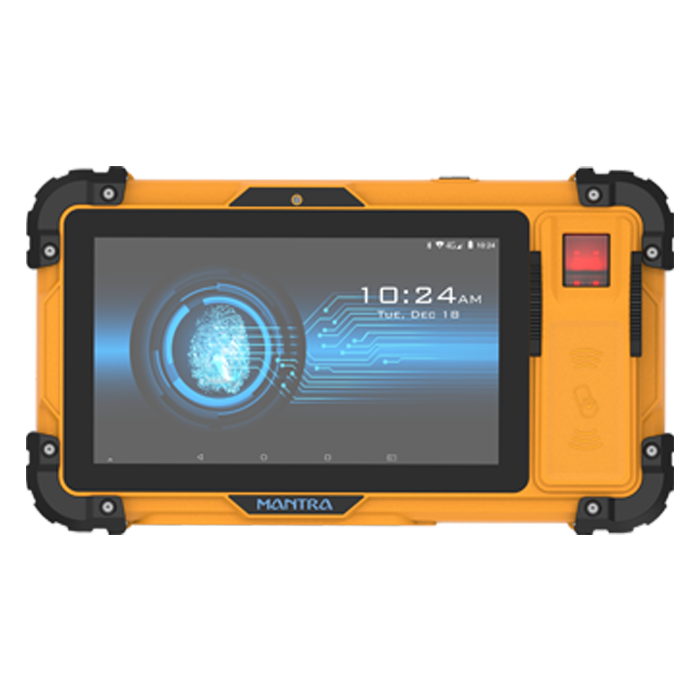
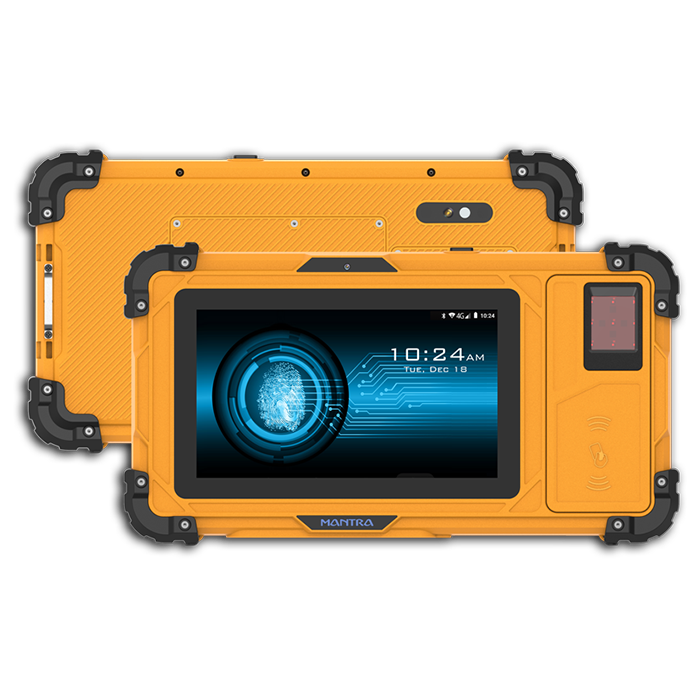
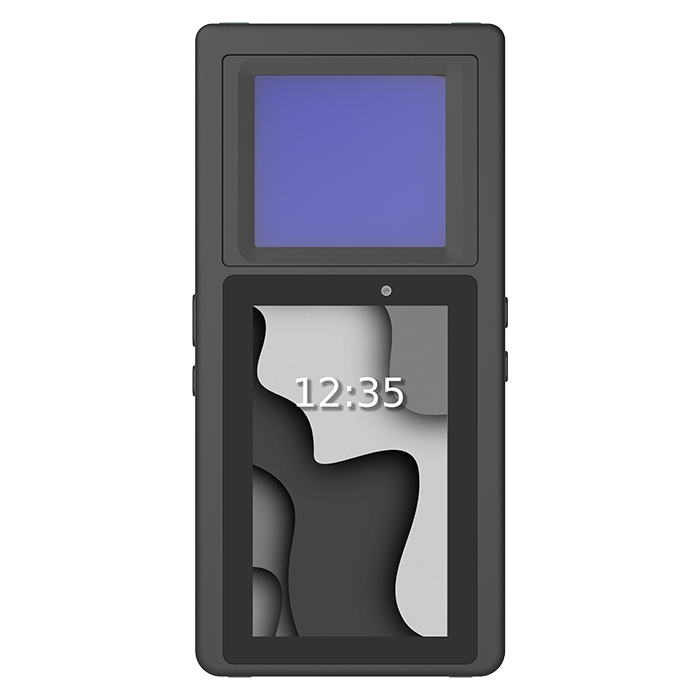
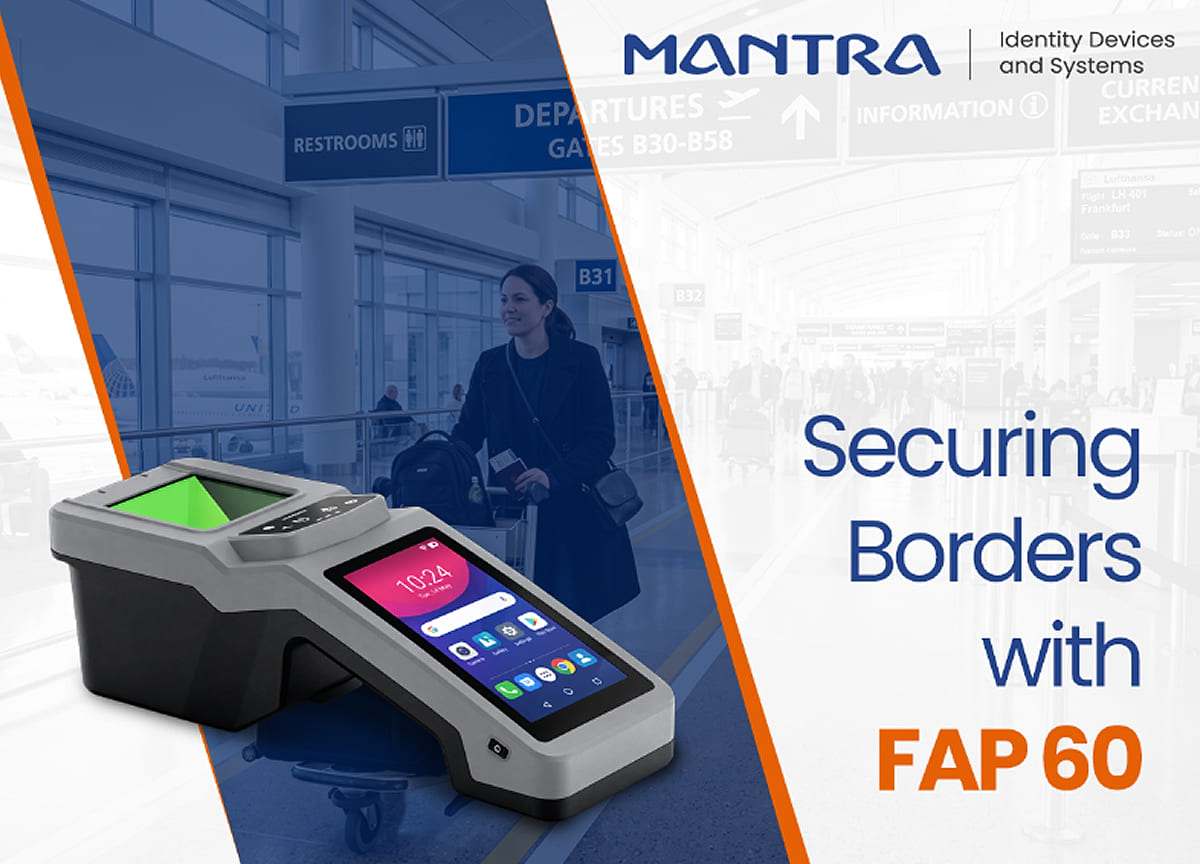
MOXA 52 handheld biometric terminal, designed for portable identity-verification applications. It combines biometric capabilities with QR and barcode functionality in a device intended for field use.
For organizations designed to assist identity verification services, the terminal can serve as the point where the field operator interacts with the beneficiary and the authentication application.
Fingerprint Authentication
MOXA 52 integrates FAP 20 fingerprint capability for fingerprint based identity verification workflows.
An authorized field operator can use the terminal to capture a beneficiary’s fingerprint as required by the connected application.
This can support citizen identity verification and other field authentication workflows where fingerprint authentication is part of the service.
Facial Recognition
MOXA 52 also supports facial recognition.
This provides another biometric modality for applications designed around face-based identity verification.
For organizations managing different citizen service workflows, having more than one biometric modality available can provide flexibility when designing the authentication process.
The modality used in actual deployment depends on the requirements of the application and identity platform.
QR & Barcode
The authentication process may also begin with a non-biometric identifier.
A beneficiary credential or service document may contain a QR code or barcode that the operator can scan through the terminal.
This can help retrieve or associate the relevant record before biometric authentication takes place.
Bringing these capabilities together in one handheld terminal can reduce the need for operators to carry multiple devices during field operations.
Where Does Liveness Detection Fit With MOXA 52?
This is an important distinction for organizations evaluating biometric hardware.
The biometric terminal and the liveness mechanism are not necessarily the same component. MOXA 52 provides the handheld terminal and supports fingerprint, facial recognition and QR and barcode based workflows.
The liveness or Presentation Attack Detection capability may be provided by the biometric technology, SDK, authentication, or another component of the overall identity architecture.
A liveness enabled deployment can therefore look like:
MOXA 52 -> Biometric Capture -> Liveness/PAD -> Biometric Matching -> Identity Verification
The exact architecture depends on the system being deployed.
For this reason, organizations should evaluate liveness as part of the complete authentication workflow, rather than assuming that a biometric terminal ability to capture a fingerprint or face automatically means it provides liveness detection.
What Should Decision-Makers Evaluate?
When selecting handheld terminals for senior citizen services, decision-makers need to look beyond the sensor specifications.
The question should include:
-
Can the device support the required biometric modality?
Fingerprint, face, Iris or multimodal authentication may be appropriate for different applications.
-
Where is liveness detection implemented?
Organizations should understand whether liveness is provided at the sensor, device, SDK, application, or authentication platform level.
-
Can it integrate smoothly to the existing system?
A field terminal needs to work with the organization’s existing identity applications and backend information.
-
Can it support field operations?
Portability, reliability, connectivity, power and physical durability can all affect deployment.
-
Can one device support multiple workflows?
QR/barcode scanning and multiple biometric modalities can be useful where the same field workforce serves different citizen service programs.
-
How will the devices be managed?
For larger deployments, organizations should also consider device configuration, software updates, diagnostics, security controls, and lifecycle management. These considerations help determine whether a biometric terminal can support the entire field operation, rather than simply capture a biometric.
Why the Combination of Liveness & Portability Matters
Liveness detection addresses one part of the authentication challenges.
Portability addresses another.
A liveness mechanism can help assess the biometric presentation, while a handheld terminal allows the authentication process to reach locations where a conventional biometric workstation may not be practical.
Together, they can support a field-based authentication model in which security & accessibility are considered at the same time.
The technology still needs to be supported by appropriate application security, identity data protection, connectivity, and operational controls.
No single device features can replace the security of the complete identity verification architecture.
Making Identity Verification More Accessible
For senior citizens, the location of identity verification can matter as much as the verification method itself.
A service that requires a beneficiary to travel to a fixed location may not always be convenient. A field-based model can bring the authentication process closer to the person receiving the service.
Biometric liveness detection can add another layer of assurance to this process where the deployed authentication system supports it.
A handheld terminal such as MOXA 52 can provide the biometric capture and identification interfaces needed for field-based workflows, including fingerprint, facial recognition, and QR/barcode-based interactions.
The result is a broader model of identity verification that can support pension, banking, welfare, healthcare, government, and other senior citizen services.
For organizations planning such deployments, the key consideration is not simply the biometric sensor. It is how the terminal, biometric capture, liveness capability, application, identity platform, connectivity, and security controls work together at the point of service.
Frequently Asked Questions
What is biometric liveness detection?
Biometric liveness detection assesses whether a biometric presentation originates from a live person at the time of capture. It is commonly associated with Presentation Attack Detection, or PAD.
Why is liveness detection important for senior citizen services?
Senior citizen services may require biometric authentication outside controlled environments. Liveness detection can add an additional check to the biometric presentation when supported by the deployed authentication system.
What senior citizen services can use biometric authentication?
Potential applications include pension and life-certificate services, doorstep banking, welfare benefit verification, healthcare identification, financial services, and government citizen services.
Can biometric authentication be performed at a senior citizen’s home?
Yes, where the relevant service and authentication infrastructure support field-based verification. A handheld biometric terminal can allow an authorized operator to bring the biometric capture process to the beneficiary.
How does MOXA 52 support field-based identity verification?
MOXA 52 is a handheld biometric terminal with FAP 20 fingerprint capability, facial recognition, and QR/barcode functionality. These capabilities can support field-based identity-verification workflows when integrated with the appropriate application and authentication infrastructure.
Does biometric liveness detection replace biometric matching?
No. Liveness detection and biometric matching address different parts of the authentication process. Liveness assesses the biometric presentation, while matching determines whether the captured biometric corresponds to the claimed identity.
Does MOXA 52 itself provide liveness detection?
Liveness should be attributed to the specific biometric technology, SDK, or authentication application that provides the capability. MOXA 52 should not be described as having an onboard liveness feature unless the applicable product documentation confirms it.